
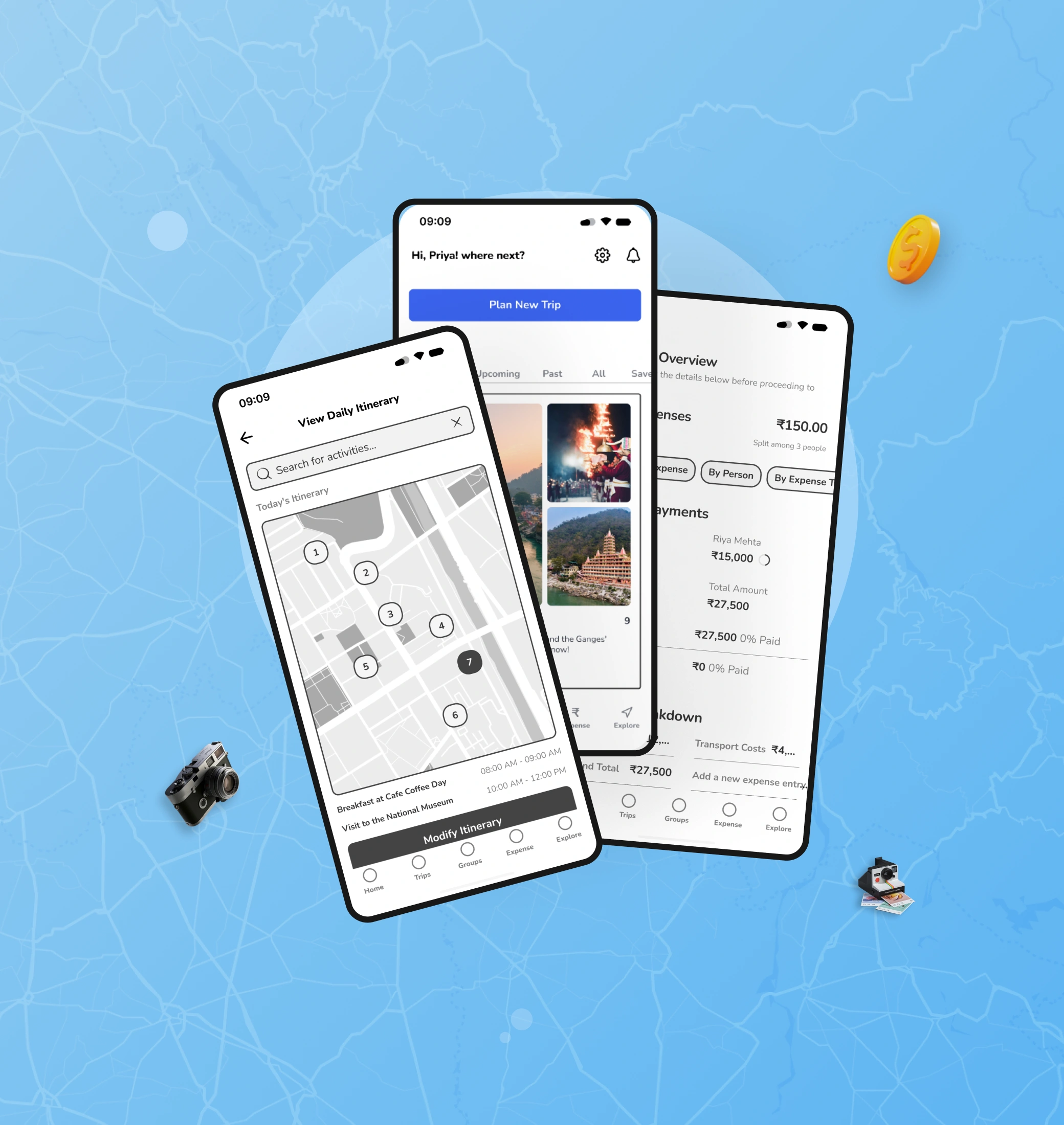
Travel Simplified is a coordination-first group travel platform designed to eliminate planning fragmentation, financial ambiguity, and decision fatigue in multi-person trips. The product introduces explicit lifecycle states across planning, decision-making, spending, and resolution. This case study documents the system modeling, trade-offs, and workflow architecture that shaped the product direction.
Business and User Goals
Business Goals:
- Build a platform to simplify group travel planning.
- Address inefficiencies caused by fragmented tools.
- Deliver a seamless experience to increase user retention.
User Goals:
-
Planners (e.g., Priya Sharma):
- Collaborate easily with the group to plan trips efficiently.
- Manage itineraries, bookings, and expenses in one place.
-
Participants (e.g., Rohan Mehta):
- Stay informed and provide input without being overwhelmed.
- Track and settle shared expenses effortlessly.
Problem Framing
Group travel coordination typically breaks down not because tools are unavailable, but because coordination states are misaligned.
Participants often operate with:
- Different assumptions about itinerary details
- Unclear financial responsibility
- Delayed or unresolved group decisions
- Fragmented communication across multiple platforms
The core breakdown is state inconsistency across planning, financial tracking, and decision-making.
This creates coordination breakdowns before and during the trip.
Product Strategy
The product strategy focused on three pillars:
- Define clear lifecycle states for planning, spending, and resolution.
- Increase financial transparency before introducing automation.
- Structure collaboration to reduce ambiguity instead of replicating chat behavior.
The priority was predictable coordination over feature expansion.
The Solution
- Trip Lifecycle Framework: Defines structured transitions from trip creation to closure. Prevents parallel planning assumptions.
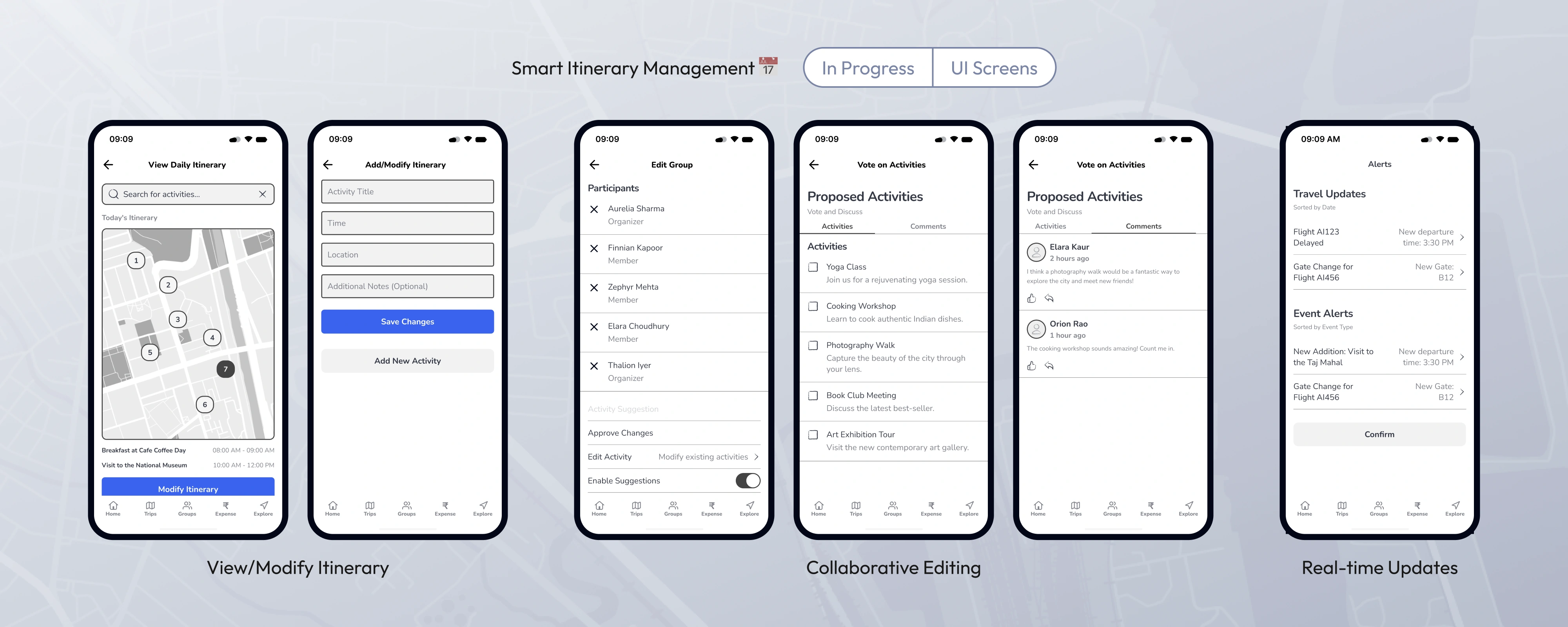
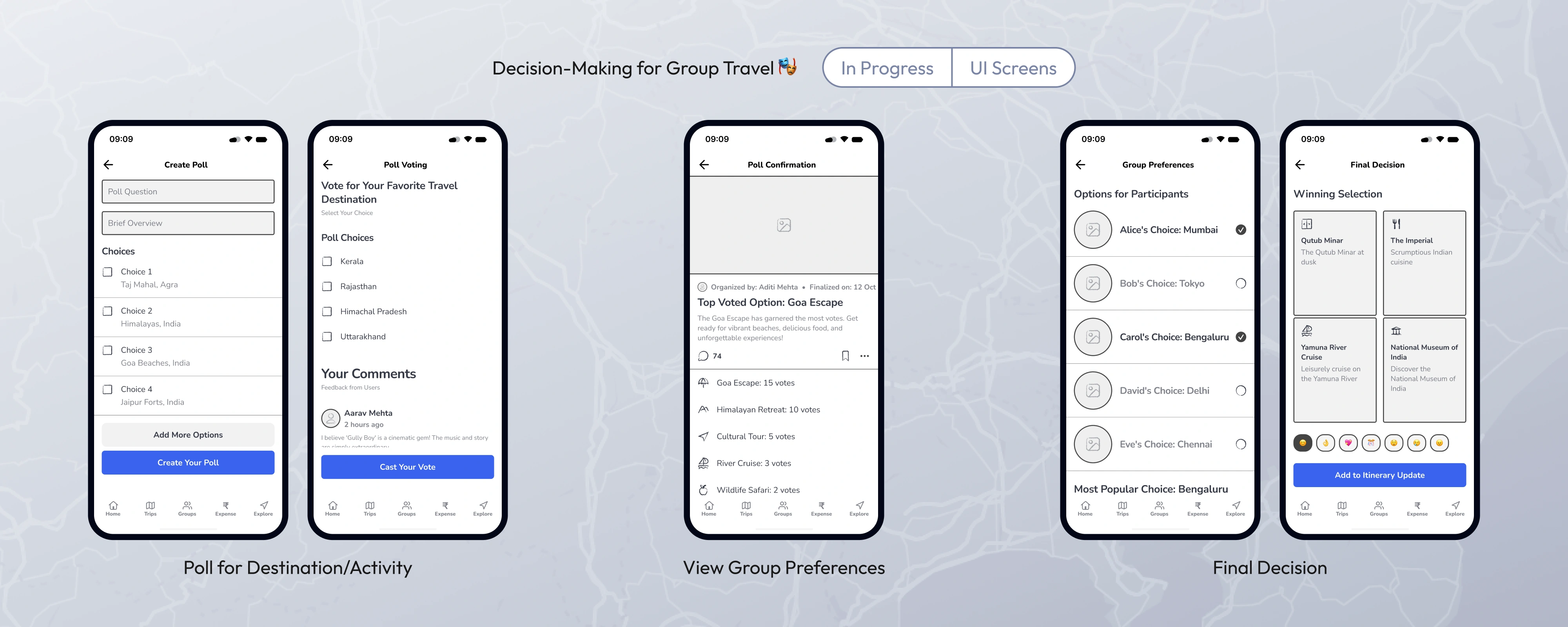
- Collaborative Decision Flow: Introduces bounded voting and confirmation states to reduce unresolved debates.
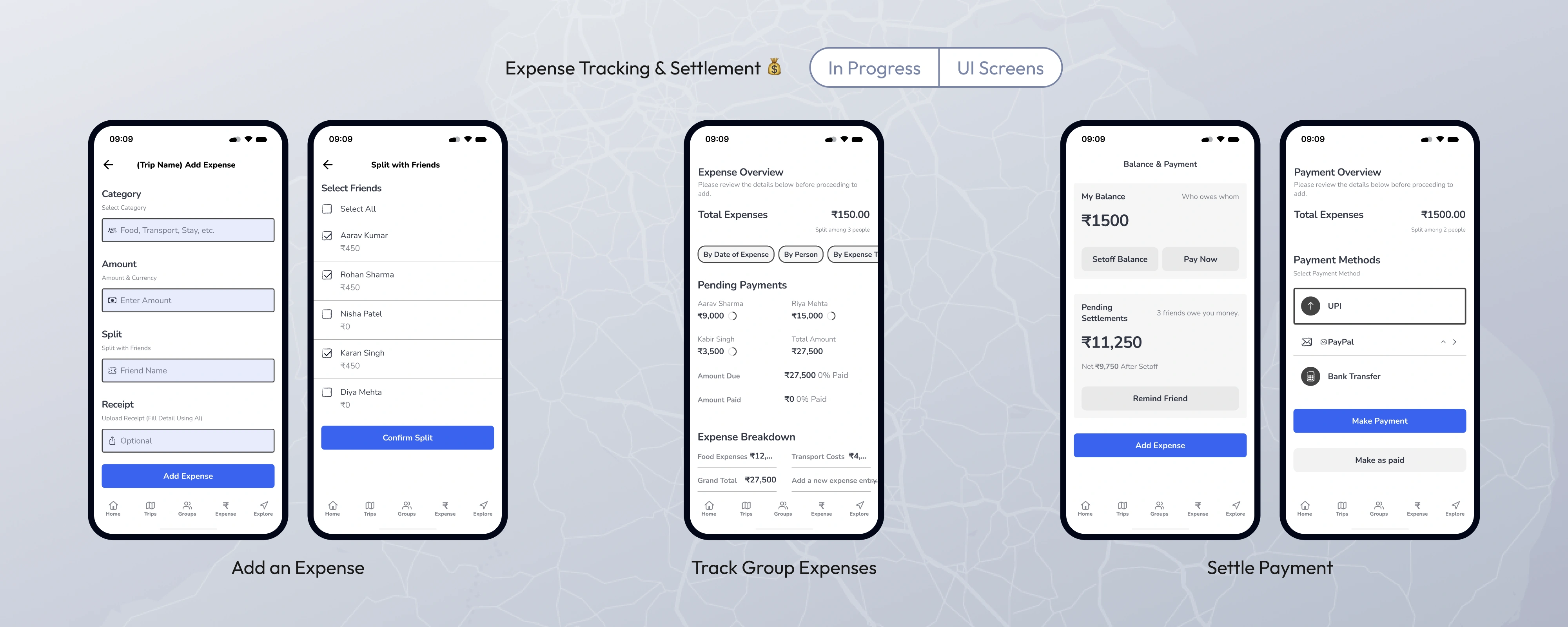
- Shared Expense Engine: Implements real-time balance logic to eliminate post-trip reconciliation friction.
- Smart Itinerary Management: Maintains visibility across edits and updates to prevent information asymmetry.
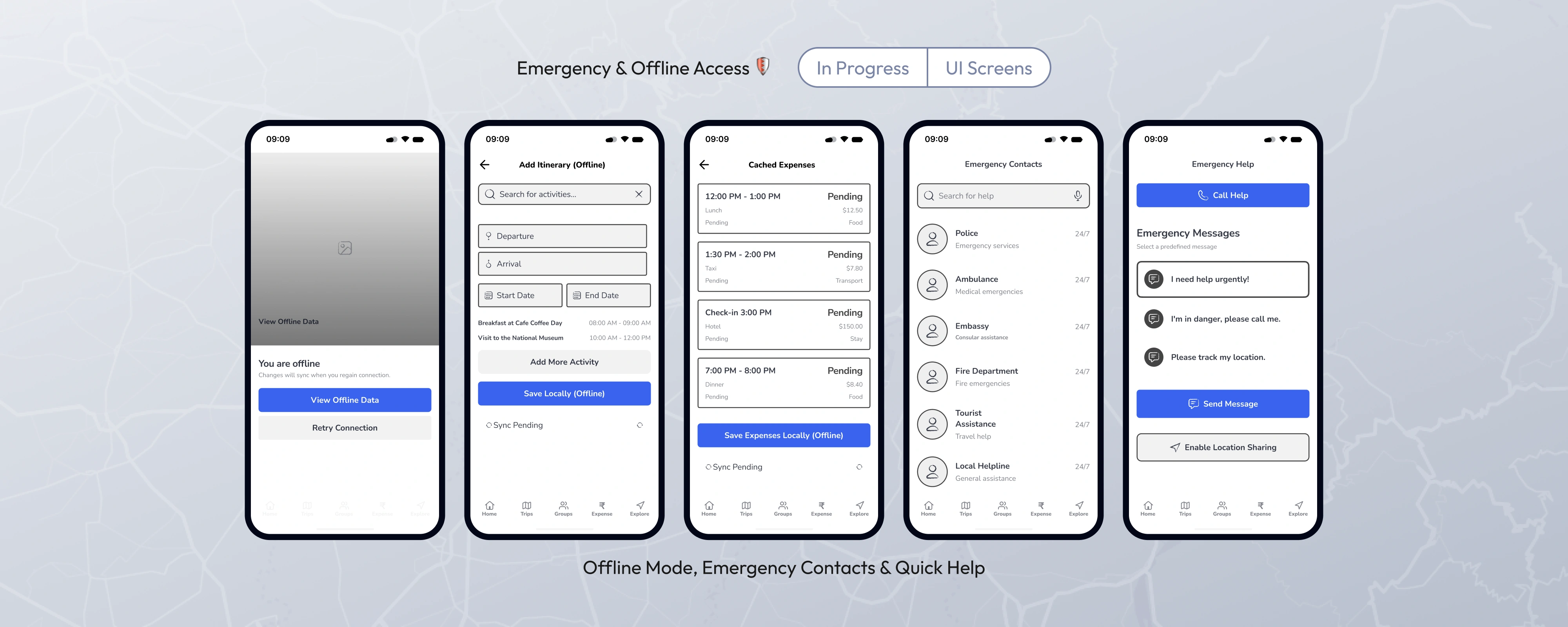
- Offline & Emergency Layer: Ensures reliability beyond connectivity constraints, reinforcing system resilience.
- The solution prioritizes behavioral alignment over automation complexity.
System Architecture Thinking
The system was modeled around four coordination states:
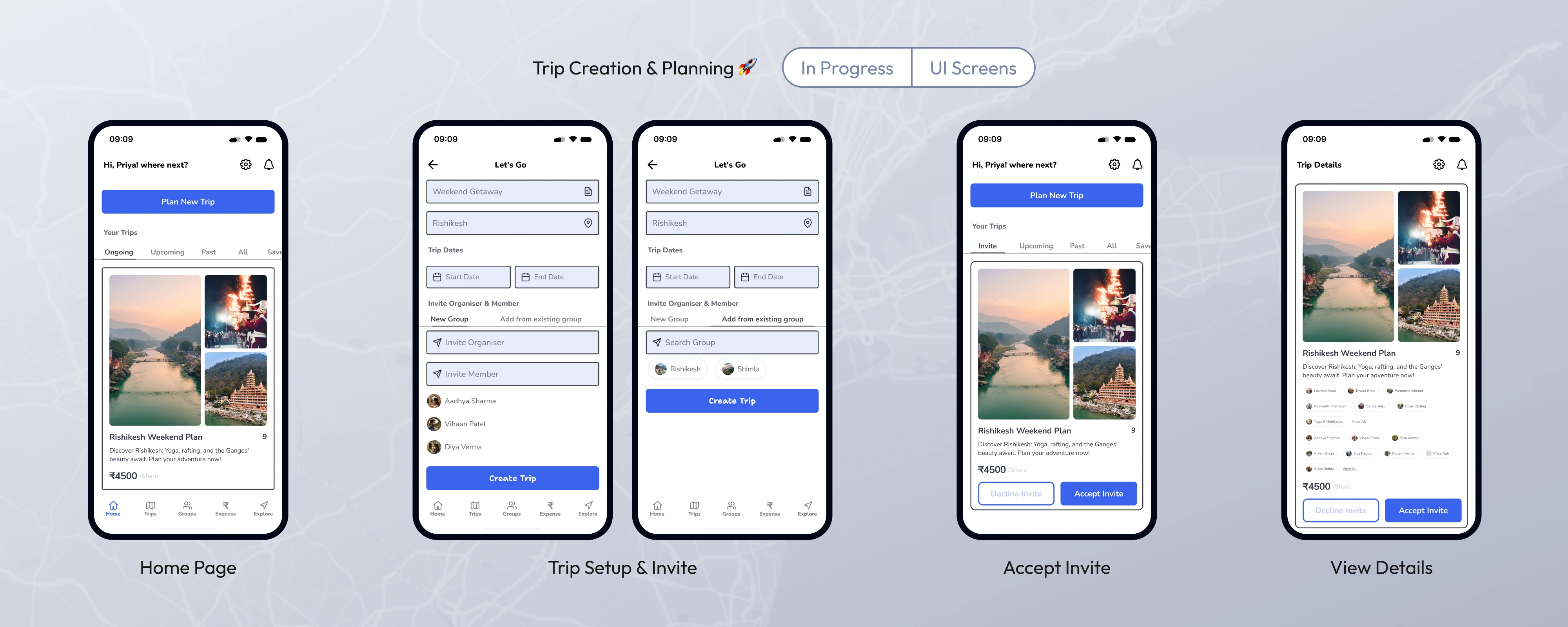
- Planning State – Trip creation, invitation, and itinerary formation
- Decision State – Polling, voting, and finalization logic
- Financial State – Expense entry, split calculation, and balance visibility
- Resolution State – Settlement, updates, and emergency handling
Each screen supports transitions between these states to maintain alignment across participants.
This modeling approach prevented feature fragmentation and state drift.
Flows (UI Screens)
Research & Key Insights
Research combined behavioral observation, secondary analysis of travel planning patterns, and workflow mapping.
Key insights:
- Decision fatigue increases when voting mechanisms are unstructured.
- Financial disputes typically arise from delayed visibility, not malicious intent.
- Groups struggle when planning states are not explicitly defined.
- Most tools optimize booking, not coordination.
The opportunity was to design around coordination logic rather than travel discovery.
Trade-offs
- Structured coordination over flexible free-form collaboration
- Manual expense entry before banking automation
- Lifecycle clarity before travel marketplace expansion
- Coordination focus instead of booking optimization
Constraints
- No booking API integration in early phase
- No financial transaction sync
- Variable group sizes and participant roles
- Unreliable connectivity during travel
These boundaries shaped the product’s phased evolution.
Results
- Defined explicit coordination states to prevent parallel planning assumptions.
- Introduced continuous balance visibility to reduce financial ambiguity.
- Structured decision finalization to reduce unresolved group debates.
- Improved trip reliability through offline caching and emergency readiness logic.
Learning
- Coordination failures are typically state failures, not communication failures.
- Structured lifecycle modeling reduces friction more effectively than adding features.
- Financial transparency must precede automation.
- Clear state transitions create trust in collaborative systems.
Feedback and Iteration
Positive Feedback:
- Users loved the centralized itinerary dashboard and real-time updates.
Challenges Identified:
- Support for larger groups beyond the initial 20-person limit.
Next Evolution
Future iterations will explore:
- Payment gateway integration
- Booking platform connectivity
- Automated expense recognition
- Context-aware travel alerts
Expansion will follow system stability, not feature ambition.
Conclusion
Travel Simplified reframes group travel as a coordination system rather than a booking tool.
By modeling lifecycle states across planning, decision-making, and financial resolution, the product reduces ambiguity and aligns participants through predictable structure.
The focus remains on system clarity before automation or marketplace expansion.