
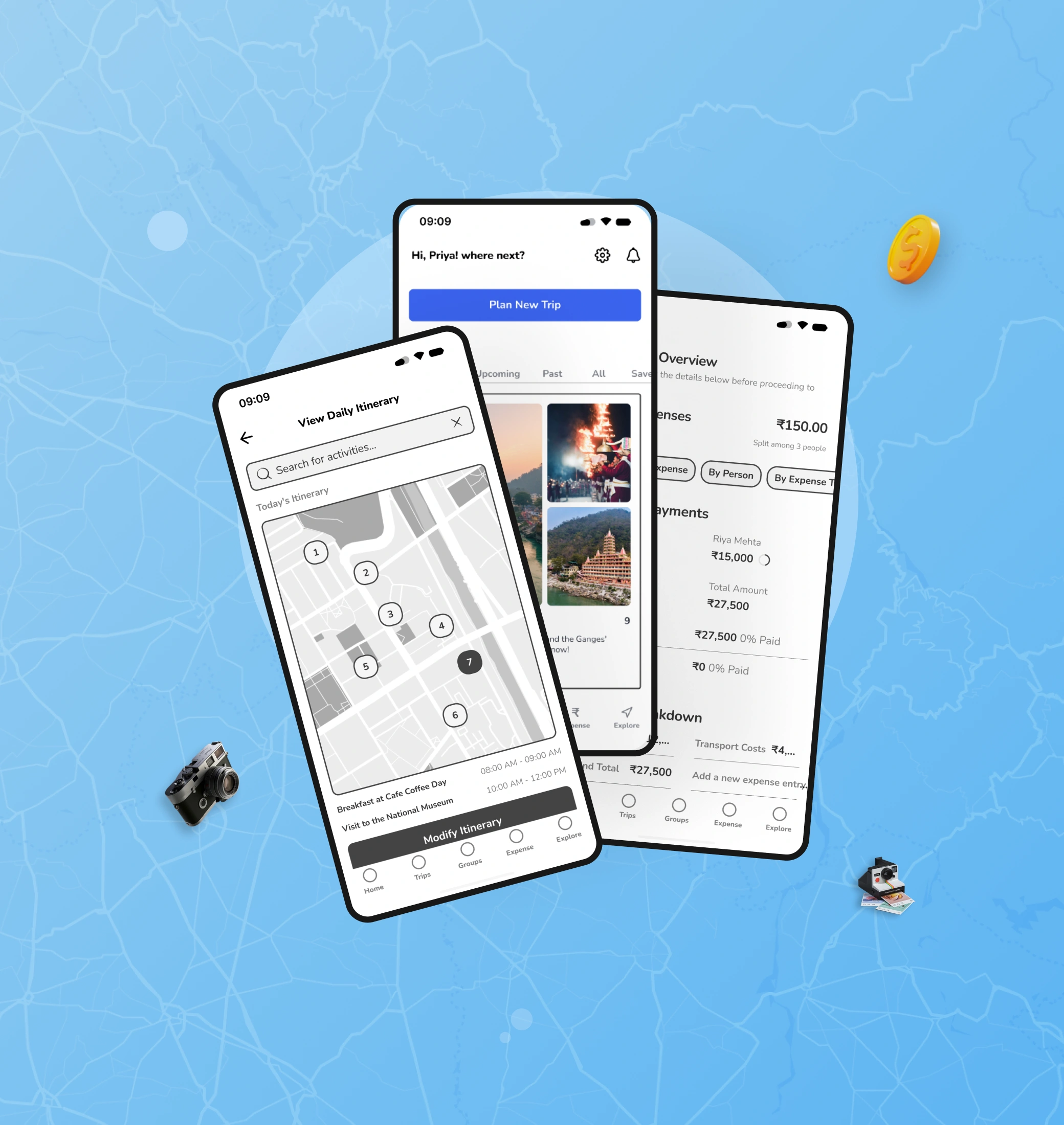
The challenge
Group travel becomes difficult when decisions, conversations, expenses and plans are scattered across different tools.
The product idea
One shared space where a group can plan, decide, spend and adapt together.
The complexity
Trip → People → Decisions → Itinerary → Expenses → Changes → Emergencies
The product has to hold all of that together without turning every group trip into a coordination project of its own.
Key product decisions
- Group voting instead of endless chat discussions.
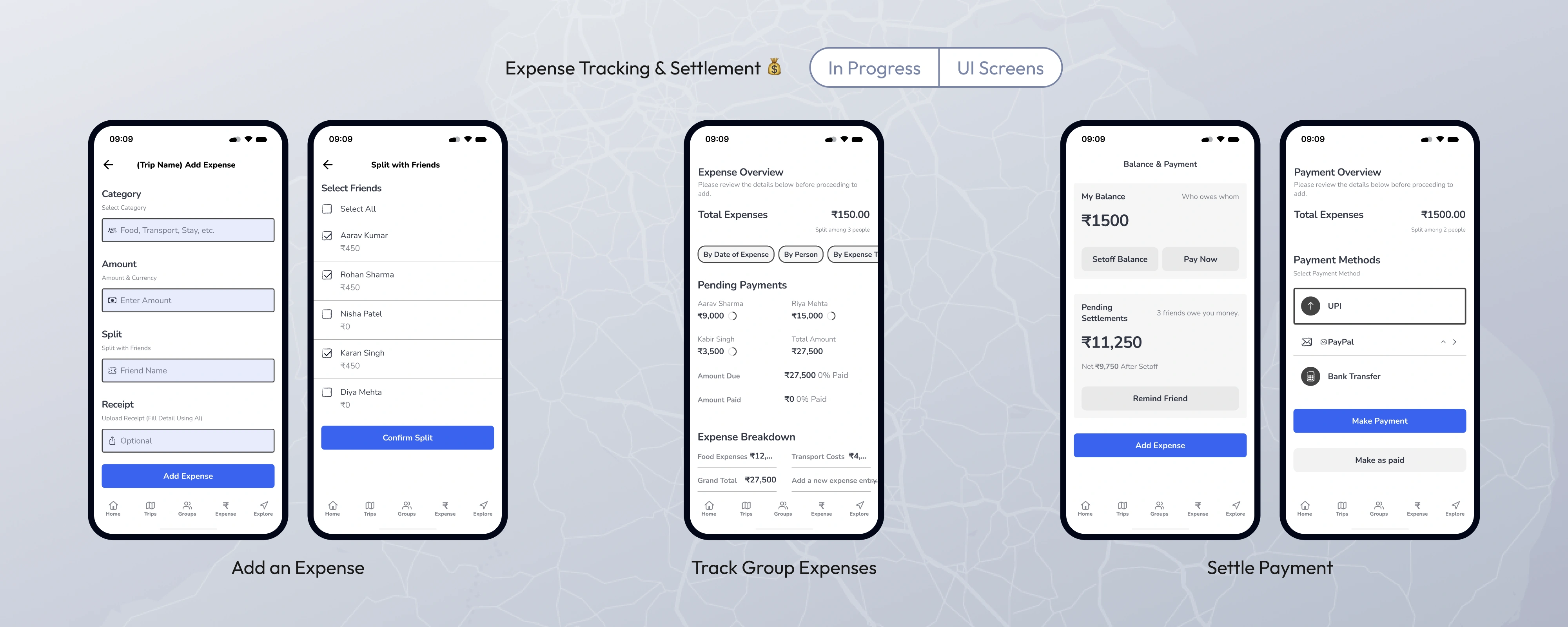
- Shared expense tracking and settlement so balances are visible as they happen.
- Collaborative itinerary editing so the plan can move without losing its structure.
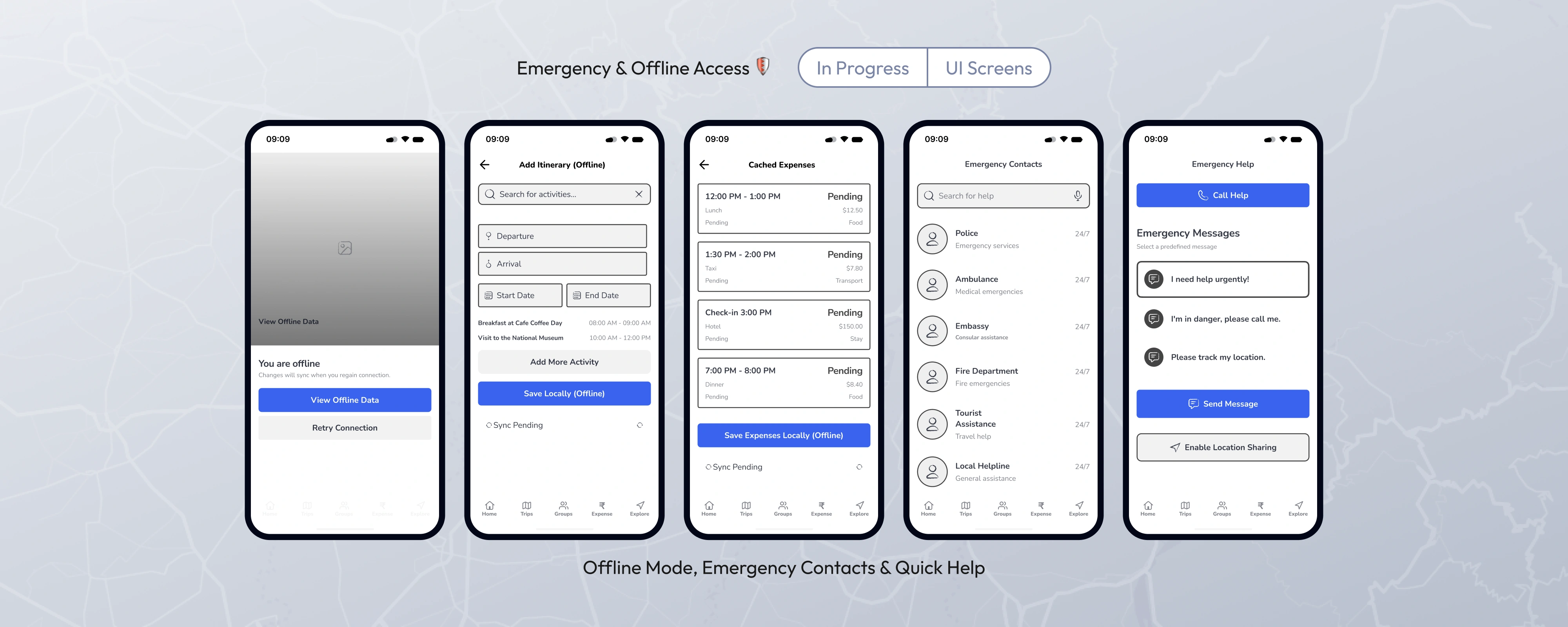
- Offline access to critical trip information when connection is unreliable.
- Real-time travel updates so itinerary changes and disruptions are visible to everyone.
Designing for real-world failure
Travel breaks down in small, practical ways. The product needed to work when the plan was not perfect.
- No internet: key trip details still need to be available.
- Someone has not accepted the invite: the trip still needs to be understandable without blocking everyone else.
- The group cannot agree on an activity or destination: a lightweight decision flow helps keep the plan moving.
- Itinerary changes: the update needs to be seen, acknowledged and reflected in the plan.
- Someone owes money: balances and pending amounts need to be clear, not hidden in messages.
- Flight or gate changes: critical changes need to stand out without adding noise.
- Emergency situations: contacts, help information and critical trip context should not be buried.
Selected product flows
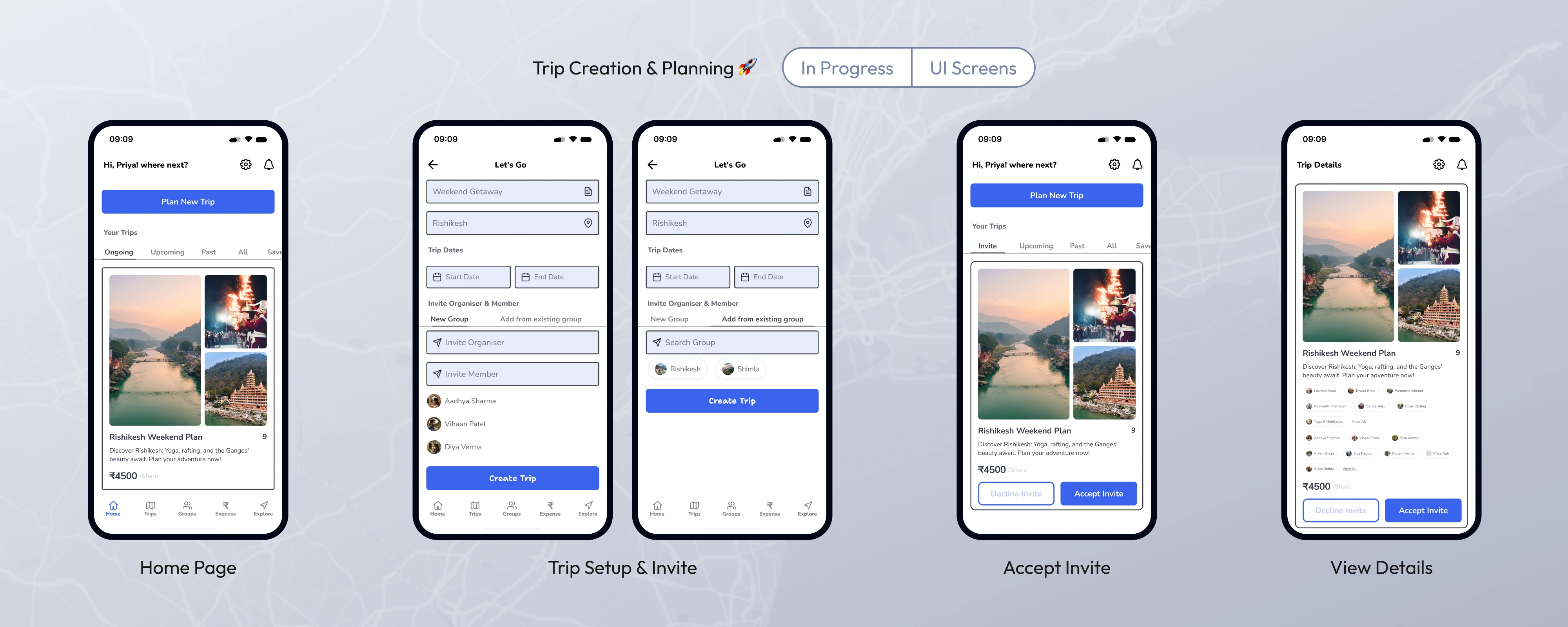
Trip planning: the experience starts with the trip itself — who is included, what matters, and what needs to be decided before the group travels.
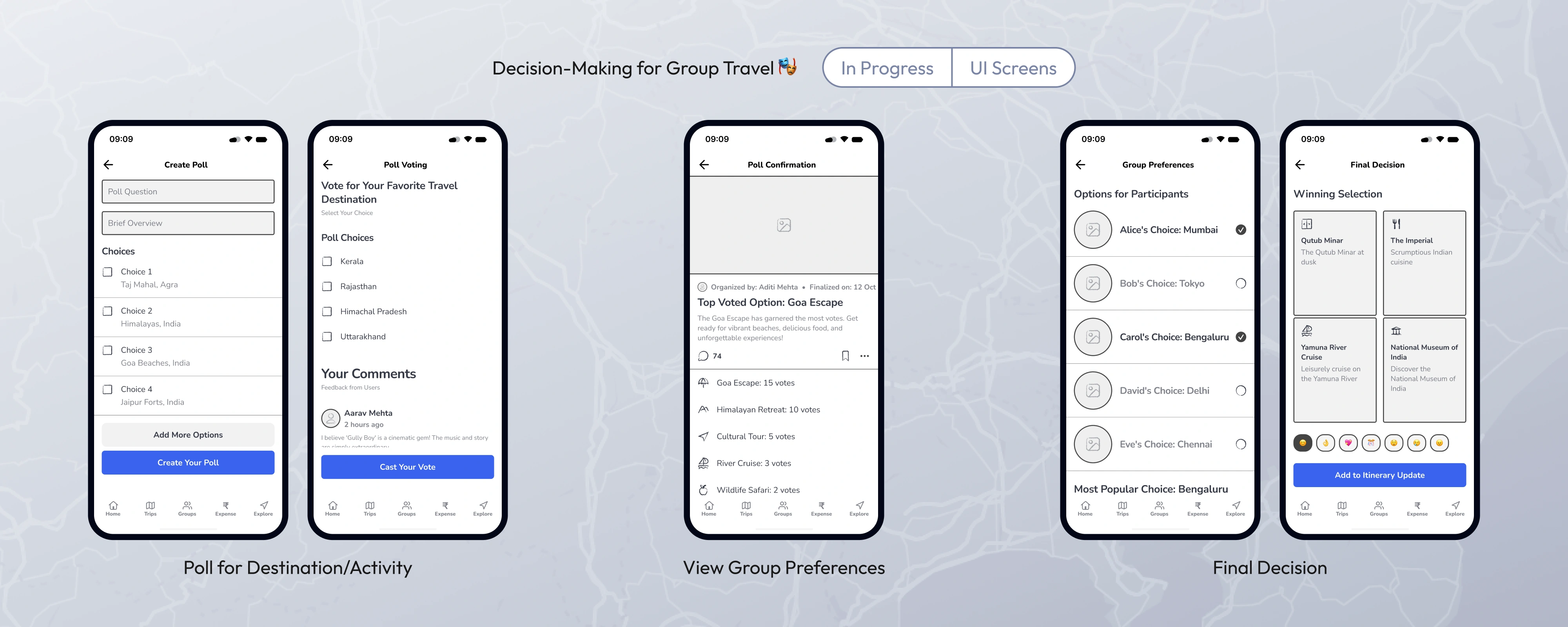
Decision making: rather than letting the group decide in a long thread, the product creates a cleaner decision path around preference, vote and final choice.
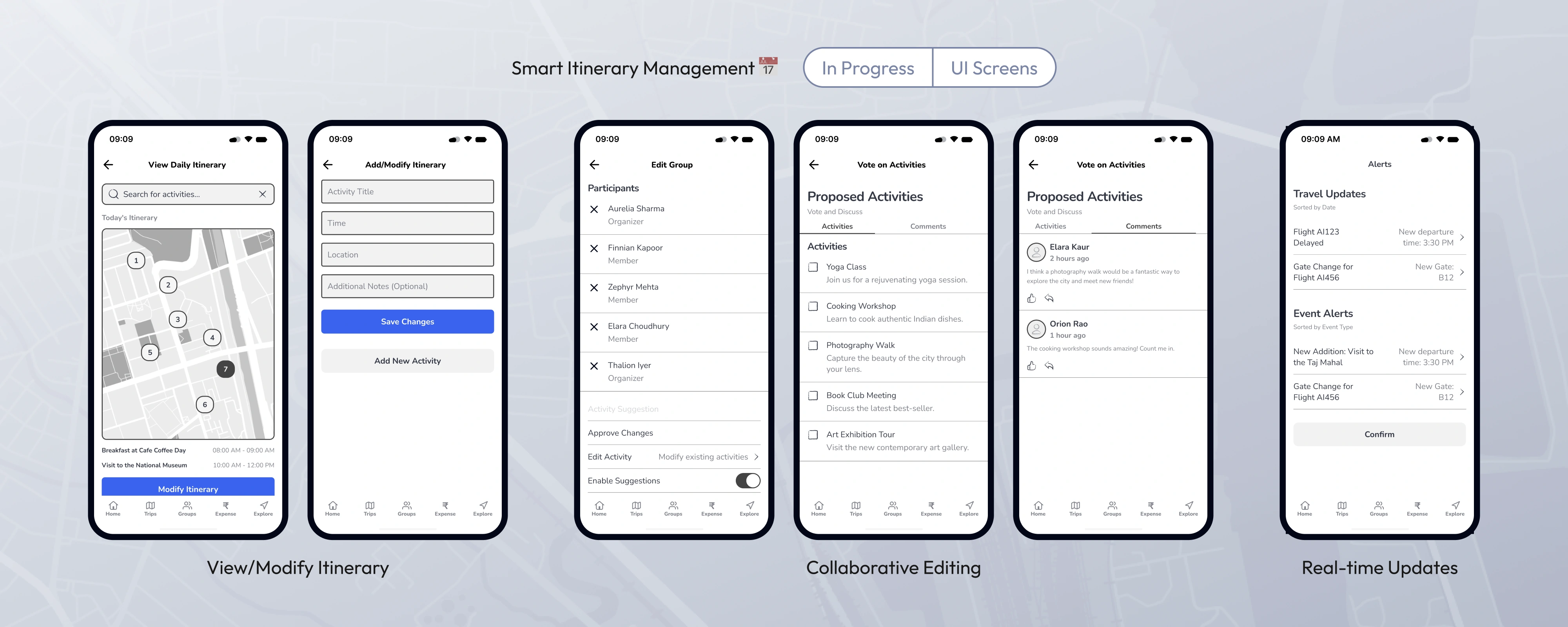
Itinerary: plans shift, people add suggestions, and itinerary updates need to stay legible. The flow supports collaborative editing without removing the sense of shared ownership.
Expenses: the product treats shared spend as part of the trip, not as a separate admin task. Balances, splits and settlements need to be visible and easy to understand.
Emergency: offline information, contact details and urgent itinerary changes need to work in the moments when the usual flow is no longer reliable.
Learning & carry forward
This project reinforced that group travel is not just a planning problem. It is a coordination problem.
The main lesson was that product structure matters as much as individual screens. When a trip includes people, money, changing plans and surprise disruptions, the interface has to help people understand who is involved, what is decided, what is still pending, and what may need attention next.
- Designing for coordination, not just individual tasks.
- Making complex multi-user workflows understandable without reducing flexibility.
- Designing for disagreement and edge cases, not only the ideal path.
- Treating offline and emergency states as part of the core experience, not an afterthought.
- Reducing cognitive load by giving the group a clear shared structure instead of forcing them to reconstruct it from scattered updates.
- Thinking beyond individual screens and designing the complete system around how the trip actually unfolds.